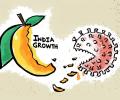
The Reserve Bank on Wednesday retained the GDP growth forecast at 9.5 per cent for the current fiscal but cautioned that the economic recovery is not yet strong enough to be self-sustaining and durable.
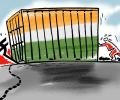
India has been relatively insulated from the severe headwinds in the West. However, with a third of the global economy expected to slip into recession in calendar year 2023, the impact will strongly be felt on India's exports and trade economy, leading economists said in a panel discussion at the Business Standard BFSI Insight Summit in Mumbai on Wednesday. The panel comprised former Reserve Bank of India executive director and former Monetary Policy Committee member Mridul Saggar, State Bank of India Chief Economic Advisor Soumya Kanti Ghosh, Citibank India Chief Economist Samiran Chakraborty, ICRA Chief Economist Aditi Nayar, and IndusInd Bank Chief Economist Gaurav Kapoor. The topic of the panel discussion was No recession in sight: Is India decoupled from developed economies?

The domestic aviation industry is expected to report a net loss of Rs 25,000-26,000 crore this fiscal with elevated jet fuel prices and fare caps continuing to pose a major challenge for the airlines' profitability, domestic rating agency ICRA Ltd said on Thursday. The domestic airlines, however, are likely to post a reduced net loss of Rs 14,000-16,000 crore in the next financial year on the back of a "notable recovery" in air passenger traffic and lower level of debt, ICRA said. The ratings agency also estimates that the industry will require an additional funding in the range of Rs 20,000-22,000 crore during FY22-FY24.

The Reserve Bank on Friday retained the GDP forecast for the current financial year at 9.5 per cent and flagged global semiconductor shortages, elevated commodity prices and potential global financial market volatility as downside risks to economic growth. In his address after the three-day meeting of the rate-setting panel, RBI Governor Shaktikanta Das said recovery in aggregate demand gathered pace in August-September, and it is reflected in high-frequency indicators, like railway freight traffic; port cargo; cement production; electricity demand; e-way bills; GST and toll collections. "The ebbing of infections, together with improving consumer confidence, has been supporting private consumption," he said, and added the pent-up demand and the festival season should give further fillip to urban demand in the second half of the financial year.

According to a report in Outlook on Sunday, Suresh Raina was unhappy with the hotel room he was given at the CSK team hotel in Dubai because it did not have 'proper balconies'.

The Reserve Bank's growth projection for next financial year is lower than 8-8.5 per cent projected by the finance ministry in the recent Economic Survey which was tabled in Parliament on January 31. Unveiling the bi-monthly policy, RBI governor Shaktikanta Das said, "Recovery in domestic economic activity is yet to be broad-based, as private consumption and contact-intensive services remain below pre-pandemic levels."
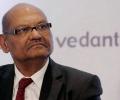
With a robust outlook for mineral-led growth in India, Anil Agarwal-led Vedanta Limited is looking to invest up to $20 billion across its businesses, which includes doubling of silver production and steel capacities. In a virtual press conference had last month, Agarwal said the company planned a capex of $5 billion over a period of three years. The company has not given a timeline for $20-billion investment.

The dollar moved higher, while prices for US government debt fell, as traders ramped up bets the Federal Reserve would raise interest rates in March

Tata Motors on Wednesday launched its Tiago EV with introductory prices for first 10,000 customers ranging between Rs 8.49-11.79 lakh

India's inflation trajectory in the coming months will be influenced more by the geo-political situation due to the war in Europe and its impact on supply chains and commodity prices. However, the country is better placed than most to "weather the storm" and achieve growth of close to 8 per cent in the current fiscal year, the finance ministry said in its latest monthly economic report on Thursday. "Through the channel of imports, elevated global crude and edible oil prices now have a significant impact on India's inflation outlook. "Government measures to keep the prices of these commodities in check, along with the recent hike in policy rates by the RBI, are expected to temper inflationary pressures in the economy," the monthly economic report for April, drafted by the finance ministry's economic division, said.

'It's important that every portfolio is well diversified.' 'My own portfolio is diversified across asset classes: 50% is in equity funds, 15% in international schemes, 25% in debt funds and 10% in sovereign gold bonds.'
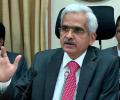
While efforts are being mounted on a war footing to arrest its spread, COVID-19 will impact economic activity in India directly through domestic lockdown. The second-round effects, it said, would operate through a severe slowdown in global trade and growth.

'They can shift to dynamic asset allocation funds to automatically rebalance their equity exposure.'

The Asian Development Bank (ADB) on Thursday lowered the growth forecast for India to 6.5 per cent for the current fiscal, from the earlier 7 per cent projection, on the back of subdued demand and high inflation.

However, the World Bank has projected India's GDP growth rate at 7.5 per cent for the next three financial years, including the current one.

After Rajasthan, petrol price on Thursday crossed the Rs 100 per litre mark in Madhya Pradesh after fuel rates were increased for the tenth day in a row. Petrol price was hiked by 34 paise per litre and diesel by 32 paise, according to a price notification of state-owned fuel retailers. While branded or additive-laced petrol, which attracts higher taxes, had crossed the Rs 100-mark in some places in states like Maharashtra, Madhya Pradesh and Rajasthan, regular petrol crossed the physiological mark in Sriganganagar town of Rajasthan on Wednesday, and on Thursday it went past that mark in Madhya Pradesh. In Anuppur of Madhya Pradesh, petrol is priced at Rs 100.25 per litre and diesel at Rs 90.35. Fuel prices differ from state to state depending on the incidence of local taxes such as VAT and freight charges.

Reliance Industries, the Tata group, Bharti Airtel and Aditya Birla are among Indian conglomerates that have hedged their revenue and costs linked to the US dollar, giving them financial cover as the rupee fell past 80 against the greenback on Tuesday.

The IMF said global growth is projected to reach 3.9 per cent in 2018 and 2019, in line with the forecast of the April 2018 WEO, but the expansion is becoming less even, and risks to the outlook are mounting.

The economic impact of the Omicron variant of COVID-19 on emerging economies will depend on a mix of government restrictions, public comfort with social interactions, and capacity of governments and central banks to provide additional policy support to the private sector, Moody's Investors Service said on Wednesday. The emergence of the new variant poses new risks to the global economic growth and inflation outlook, as concerns mount about the variant's health risks and several countries have imposed new travel restrictions in recent days. These restrictions will likely increase over the coming weeks until scientists learn more about the variant, it said.

Indian PC shipments for the third quarter of CY21 touched a total of 4.5 million, making it India's biggest-ever single quarter. To put this in perspective, it is bigger than the total yearly consumer shipments in 2019, a year before the pandemic hit. As a result, many brands also reported their biggest quarter of PC shipments.

'India has the potential to do a lot more to take advantage of the time today where we stand to gain, geopolitically and in terms of market attractiveness.'

The IMF on Tuesday cut India's economic growth forecast by 0.5 percentage points to 9 per cent for the current fiscal year, with its chief economist Gita Gopinath saying that the slight downgrade is mainly due to the impact of the spread of the Omicron variant. "If you look at the 2021-22 fiscal year, we have a slight downgrade of -0.5 percentage points and for the next fiscal year 2022-23 we have a slight upgrade of 0.5 percentage points. So, growth for the previous fiscal year is now nine per cent and for this year now is at nine per cent. We moved it up slightly," Gopinath told reporters during a news conference in Washington. In its latest update of World Economic Outlook on Tuesday, the International Monetary Fund has cut India's economic growth forecast to 9 per cent for the current fiscal year ending March 31, joining a host of agencies which have downgraded their projections on concerns over the impact of the spread of Omicron on business activity and mobility.

Eminent economist Arvind Panagariya has said India is on the cusp of returning to a high growth trajectory and voiced confidence that the country will become the world's third-largest economy by 2027-28. Currently, India is the fifth largest economy "so it's another five years.We are already in (the year) 2023. "So 2027-28, India should be the third-largest economy," Panagariya, Columbia University Professor and former Vice Chairman of NITI Aayog, told PTI in an interview in New York.

We live in hope that India and its airlines might finally grow up, notes Anuli Bhargava.
While foreign currency rating was retained at Baa2 -- the second-lowest investment grade score -- Moody's also projected a fiscal deficit of 3.7 per cent of gross domestic product in the year through March 2020, a breach of the government's target of 3.3 per cent.

The country's manufacturing sector activity recorded another sharp deterioration in business conditions during May as new orders placed with producers continued to fall after April's record contraction, leading firms to cut jobs at the quickest pace on record, a monthly survey said on Monday.

'Yet the market didn't do all that badly because it was cushioned by domestic inflows.'

The Indian economy, severely hit by the coronavirus pandemic, is projected to contract by a massive 10.3 per cent this year, the International Monetary Fund said on Tuesday. However, India is likely to bounce back with an impressive 8.8 per cent growth rate in 2021, thus regaining the position of the fastest growing emerging economy, surpassing China's projected growth rate of 8.2 per cent, the IMF said in its latest 'World Economic Outlook' report.

Poor governance and mediocre short-sighted politics are destroying the paradise that Goa was as its environment, water table, culture and way of life is drastically threatened by tourism and migration, points out Ramesh Menon.

'It is going to be a tough balance for the RBI to manage economic stability and ensure smooth government borrowing.'

'The government is trying to kickstart the investment cycle in India and while the corporate investments are yet to gather momentum, there are early signs of the same.'

PMI went up from 51.2 points in May to 53.1 in June. Owing to the June figure, PMI for manufacturing stood at 51.9 points in the first quarter of 2018-19 against 51.8 points in the fourth quarter of 2017-18.
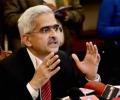
Reserve Bank Governor Shaktikanta Das has pitched for policy support from all sides -- fiscal, monetary and sectoral -- to nurture recovery of the economy hit by the second wave of the coronavirus pandemic. The dent on economic activity due to the second wave of the pandemic during April-May necessitated continuation of monetary measures to support the process of economic recovery to make it durable, Das had said while participating in the meeting of the Monetary Policy Committee (MPC) earlier in the month. "Overall, the second wave of COVID-19 has altered the near-term outlook, and policy support from all sides - fiscal, monetary and sectoral - is required to nurture recovery and expedite return to normalcy," Das said, as per the minutes of the meeting released on Friday.

A weak margin outlook in the near term and lack of fresh triggers may keep the Godrej Consumer Products (GCPL) stock under pressure. The stock, after tepid September quarter (Q2) results and marginal downward revision in earnings estimates, declined 3.5 per cent in trade on Friday. Though consolidated sales of the company, which owns the Goodknight and Cinthol brands, grew 8.5 per cent year-on-year (YoY), its operating profit declined because of the sharp contraction in margins.

Around 15 years ago, when Reliance Industries (RIL) struck natural gas in the Krishna-Godavari (KG) basin off the east coast, the government made plans to supply that fuel cheaply to scores of generators that sprang up in India triggered by the discovery. Most of the plants, which account for 6 per cent of India's total generation capacity, operate sparsely after the KG-D6 area first failed to meet production targets, and then finally shut shop. Affordable domestic gas was why those thermal plants came up and the rate of the fuel today is why those generators hardly operate. Record liquefied natural gas (LNG) rates may yet again unravel India's ambitions to expand use of gas in industries, households and vehicles. Rates, while volatile, may stay strong this decade as developed nations with higher purchasing power embrace gas as the transition fuel.

For Q4CY20, PC shipments grew by 27 per cent year-on-year, said data from the IDC.

At least one person was killed and 12 others injured on Tuesday when the police opened fire to disperse angry anti-government protestors in Sri Lanka's southwestern region of Rambukkana, officials said.

India is expected to grow by 8.75 per cent in 2010 and 8.5 per cent in 2011, driven by a strong domestic demand, International Monetary Fund said in its 2010 World Economic Outlook released here on Wednesday.

New businesses have been secured from the public and private sectors, as well as domestic and international markets.

The Reserve Bank on Friday projected retail inflation to be in 5-5.2 per cent range during the first half of the next fiscal year, expecting further softening of vegetables prices in near term. Also, it has lowered the retail inflation forecast for the current January-March quarter of 2020-21 fiscal at 5.2 per cent. The Reserve Bank (RBI) has kept the key policy rate unchanged at 4 per cent, with an accommodative stance, so as to ensure that inflation remains well within the target, Governor Shaktikanta Das said while announcing the last monetary policy of 2020-21.
